


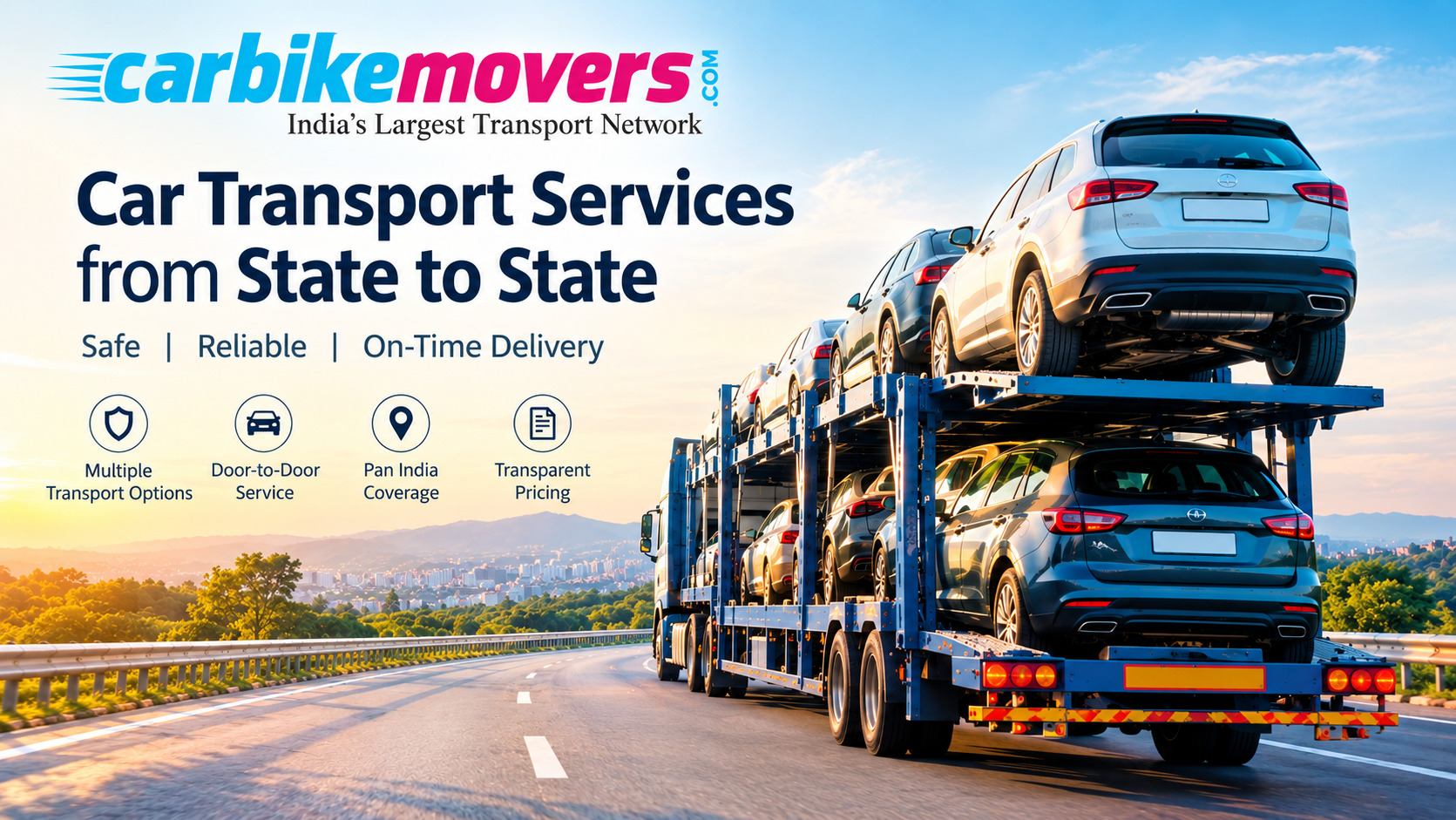
Car Transport Services from State to State: A Complete Guide
Moving your car from one state to another can be challenging, especially when you need to travel a long distance or relocate for work, business, or personal reasons. Driving your vehicle across several states may involve fuel expenses, tolls, accommodation costs, and additional wear and tear. Choosing professional car transport services from state to state can make the process more convenient and help you move your vehicle without driving it yourself.
Professional interstate car transport companies provide different transportation options, including open car carriers, enclosed car carriers, and door-to-door vehicle delivery. By comparing services, checking company credentials, and understanding transportation charges, you can choose a suitable solution for your vehicle.
In this guide, we will explain how interstate car transportation works, what affects car shipping costs, how to prepare your vehicle, and how to select a reliable car transport company.
What Are Car Transport Services from State to State?
Car transport services from state to state involve moving a car from one Indian state to another using a professional vehicle carrier or transportation service. These services are useful for individuals, families, businesses, and vehicle owners who need to relocate their cars over long distances.
For example, you may need car transportation from Delhi to Mumbai, Pune to Bengaluru, Chennai to Hyderabad, or Gurugram to Jaipur. Instead of driving the entire distance, you can arrange for a car transport company to move your vehicle to the destination.
Depending on the provider, you may choose between terminal-to-terminal transportation and door-to-door car transport services. The availability of each option depends on the pickup location, destination, road access, and carrier arrangements.
Why Choose Professional Interstate Car Transport Services?
Hiring a professional car transportation company can offer several advantages when moving your vehicle between states.
1. Convenient Vehicle Transportation
Long-distance driving can take considerable time and planning. Professional car shipping services allow you to arrange transportation while focusing on your relocation, work, or other responsibilities.
2. Reduced Driving-Related Wear and Tear
Transporting a car on a carrier avoids adding the entire interstate journey to its odometer. It can also reduce exposure to road conditions, traffic, and long-distance driving fatigue.
3. Multiple Transportation Options
Many car transport companies offer open and enclosed carriers. You can compare these options based on your vehicle type, budget, and protection requirements.
4. Door-to-Door Delivery Options
Some providers offer pickup and delivery close to your specified addresses, where vehicle access and carrier size permit. If direct access is unavailable, the company may arrange a nearby meeting point.
5. Useful for Relocation and Vehicle Purchases
Interstate car transport is useful when moving to another city, purchasing a vehicle from another state, transferring a company car, or sending a vehicle to a family member.
Types of Car Transportation Services
Before booking, understand the main car shipping options available.
Open Car Carrier Services
Open car carrier services transport vehicles on carriers exposed to outdoor weather conditions. They are commonly used for standard cars and can be a practical option for customers seeking economical interstate transportation.
Best for: Everyday cars, family vehicles, and budget-conscious customers.
Enclosed Car Transport Services
Enclosed car transport uses a covered carrier to provide additional protection from weather and road debris. Availability and pricing depend on the carrier and route.
Best for: Luxury cars, classic vehicles, collectible cars, and vehicles requiring additional protection.
Door-to-Door Car Transport
Door-to-door car transport services arrange pickup and delivery at or near the addresses you provide, subject to road access and carrier restrictions. This option can reduce the need to visit a transport terminal.
Best for: People relocating between cities or looking for a more convenient pickup and delivery process.
Terminal-to-Terminal Car Shipping
With terminal-to-terminal transportation, you drop off your car at a designated location and collect it from another terminal. This option depends on whether the provider operates suitable terminals on your route.
Best for: Customers who can arrange their own transportation to and from the terminals.
How Do Car Transport Services from State to State Work?
Understanding the vehicle transportation process can help you prepare your car and avoid unexpected delays.
Step 1: Request a Car Transport Quote
Contact a car transport company and share your pickup city, destination city, vehicle model, preferred dates, and transportation requirements.
Request a written quotation that explains what is included in the price.
Step 2: Compare Car Shipping Companies
Review the company's business details, customer feedback, transportation process, and written terms. Ask about insurance arrangements, cancellation policies, delivery estimates, and responsibility for damage during transit.
Avoid selecting a provider based only on the lowest advertised price.
Step 3: Confirm the Booking
Once you have selected a service, confirm the pickup and delivery details. Ask for the booking confirmation, agreed charges, estimated timeline, and contact details for the person coordinating transportation.
Step 4: Prepare Your Car
Remove personal belongings and loose accessories. Take photographs of the vehicle's exterior, record its condition, and follow the transporter's instructions regarding fuel, keys, and vehicle documents.
Step 5: Vehicle Pickup and Inspection
Before handing over the car, inspect it with the transporter and document any existing scratches, dents, or other visible damage. Keep a copy of the inspection report or vehicle condition receipt.
Step 6: Transportation and Tracking
The company arranges transportation using the agreed carrier and route. Ask whether tracking updates are available and whom to contact if the schedule changes.
Step 7: Delivery and Final Inspection
Inspect your vehicle when it arrives. Compare its condition with the pickup record and report any apparent damage promptly according to the company's documentation procedure and applicable terms.
Car Transport Charges from State to State
The cost of interstate car transportation varies according to the route, distance, vehicle dimensions, carrier type, pickup and delivery arrangements, and market conditions. There is no single price that applies to every car transport booking.
The following factors can affect your final quotation.
Distance Between Pickup and Delivery Locations
Longer routes generally involve higher transportation costs. However, the price may not increase at a uniform rate for every additional kilometre because carrier availability, route demand, and operating expenses also matter.
Vehicle Type and Size
A hatchback, sedan, SUV, and larger vehicle may require different amounts of carrier space. Larger vehicles can cost more to transport, depending on the carrier and booking conditions.
Open or Enclosed Carrier
Open carriers are generally more economical than enclosed carriers. Enclosed transport may cost more because it provides a covered transportation option and may have more limited availability.
Pickup and Delivery Locations
Major cities and established transport routes may offer more carrier choices. Remote areas, restricted-access streets, or locations requiring additional handling can affect the quotation.
Seasonal Demand and Scheduling
Prices may change during busy relocation periods or when carrier capacity is limited. Flexible pickup dates may give you more options, but savings are not guaranteed.
Insurance and Additional Services
Ask whether the quotation includes transportation-related insurance, handling charges, pickup and delivery, and any other applicable fees. Confirm the scope and limits of coverage in writing.
Documents Required for Interstate Car Transportation
The documents required can vary by transport company and the circumstances of the shipment. Commonly requested items include:
-
A copy of the vehicle Registration Certificate (RC)
-
Valid identification of the person arranging transportation
-
Booking confirmation and vehicle handover documents
-
Insurance or other vehicle details, where requested
If the vehicle is being transported on behalf of someone else, ask whether authorization documents are necessary. Do not hand over original vehicle documents unless the company has a legitimate requirement and you understand why they are needed.
Tips for Choosing a Reliable Car Transport Company
Choosing the right provider is important for a smoother vehicle relocation experience.
Check Company Credentials
Verify the company's business identity, contact details, and operating address. Ask for a written quotation and service agreement before paying.
Read Customer Reviews Carefully
Look for consistent feedback about communication, delivery coordination, vehicle handling, and complaint resolution. Consider recent reviews as well as the company's overall reputation.
Understand Insurance Coverage
Ask what protection applies during transportation, what exclusions exist, and how to report damage. Do not assume that every transport quotation includes comprehensive coverage.
Compare Multiple Quotations
Request quotations from more than one provider using the same pickup and delivery details. Compare the total payable amount and included services rather than just the headline price.
Confirm Delivery Estimates
Ask for an estimated pickup window and delivery timeline. Interstate delivery schedules can be affected by traffic, weather, route conditions, and carrier operations.
Get Everything in Writing
Keep the agreed price, pickup and delivery addresses, vehicle condition report, insurance details, and cancellation terms in writing. Written records can help resolve misunderstandings later.
How to Prepare Your Car Before Transportation
Preparing your vehicle properly helps document its condition and supports a smoother handover.
-
Wash the exterior so existing scratches and dents are visible.
-
Take dated photographs from multiple angles.
-
Remove personal belongings and valuables.
-
Remove loose accessories that could be damaged during transit.
-
Keep the fuel level at the amount requested by the transporter.
-
Check for fluid leaks and report existing mechanical issues.
-
Disable toll tags or automatic access devices if appropriate.
-
Keep a copy of the booking confirmation and handover report.
Follow the transporter's specific instructions rather than assuming that every company has identical preparation requirements.
Car Transport Services Between Popular Indian States
Professional vehicle transportation companies may offer interstate services across major Indian cities and regional routes. Availability depends on the provider's operating network and carrier schedules.
Examples of interstate car transportation routes include:
-
Delhi to Maharashtra
-
Haryana to Rajasthan
-
Maharashtra to Karnataka
-
Tamil Nadu to Telangana
-
Gujarat to Delhi
-
Uttar Pradesh to Madhya Pradesh
-
Karnataka to Kerala
-
Punjab to Haryana
If you need to transport a car between states, provide the exact pickup and delivery cities when requesting a quotation. This helps the company estimate the route, carrier availability, and likely delivery timeline more accurately.
Common Mistakes to Avoid When Booking Car Shipping Services
Avoid these mistakes when arranging interstate car transportation:
-
Choosing a company only by price: A low quotation may exclude important services or additional fees.
-
Skipping the vehicle inspection: Photographs and written condition reports help document the car before pickup.
-
Ignoring insurance terms: Understand the actual coverage and claim procedure before booking.
-
Leaving belongings inside the car: Personal items may be excluded from carrier protection and can create handling or safety issues.
-
Assuming delivery dates are guaranteed: Ask whether the quoted schedule is an estimate or a firm commitment.
-
Not checking payment terms: Confirm the deposit, remaining balance, cancellation policy, and receipt process.
-
Failing to keep booking records: Save the quotation, agreement, contact details, and handover documents.
Conclusion
Choosing professional car transport services from state to state can make vehicle relocation more convenient and reduce the need for long-distance driving. By comparing interstate car transport companies, understanding transportation charges, preparing your vehicle, and checking insurance arrangements, you can make a more informed booking decision.
Whether you need open car carrier services, enclosed car transport, or door-to-door vehicle delivery, compare the available options according to your budget and requirements. Request a detailed quotation, keep the agreement in writing, and document your vehicle's condition before pickup and after delivery.
With proper planning and a reliable service provider, interstate car transportation can be a practical solution for moving your vehicle across India.
Frequently Asked Questions About Interstate Car Transport
1. How can I transport my car from one state to another?
You can hire a professional car transport company that operates on your route. Share your vehicle details and addresses, compare written quotations, prepare the car, and complete the pickup and delivery inspections.
2. How much do car transport services from state to state cost?
The price depends on the route, distance, car size, carrier type, pickup and delivery arrangements, and additional services. Request a route-specific quotation for an accurate estimate.
3. Is door-to-door car transport available between states?
Many companies offer door-to-door services where road access and carrier restrictions allow. In some locations, pickup or delivery may take place at a nearby accessible point.
4. Is an open car carrier safe for interstate transportation?
Open carriers are commonly used for standard vehicles. However, cars transported on them remain exposed to outdoor conditions. Review the carrier's handling procedures and insurance terms before booking.
5. Should I choose enclosed car transport?
Enclosed transport may be suitable for luxury, classic, collectible, or otherwise valuable vehicles requiring additional protection. Compare the cost and availability with an open carrier before deciding.
6. How long does interstate car transportation take?
Delivery time depends on the distance, route, carrier schedule, pickup arrangements, traffic, weather, and other operating conditions. Ask the company for a route-specific estimate before booking.
7. Do I need insurance when transporting my car?
Ask the transport company what insurance or liability protection applies during transit. Review coverage limits, exclusions, deductibles, and the claims process. Consider whether additional coverage is appropriate for your vehicle.
8. Can I transport a non-running car between states?
Some companies can transport non-running vehicles, but you must disclose the vehicle's condition before booking. Specialized loading equipment or additional handling may affect availability and cost.
9. How can I find the best interstate car transport company?
Compare company credentials, recent customer reviews, written quotations, insurance terms, vehicle inspection procedures, and delivery estimates. Choose a provider that explains its terms clearly and provides reliable communication.