


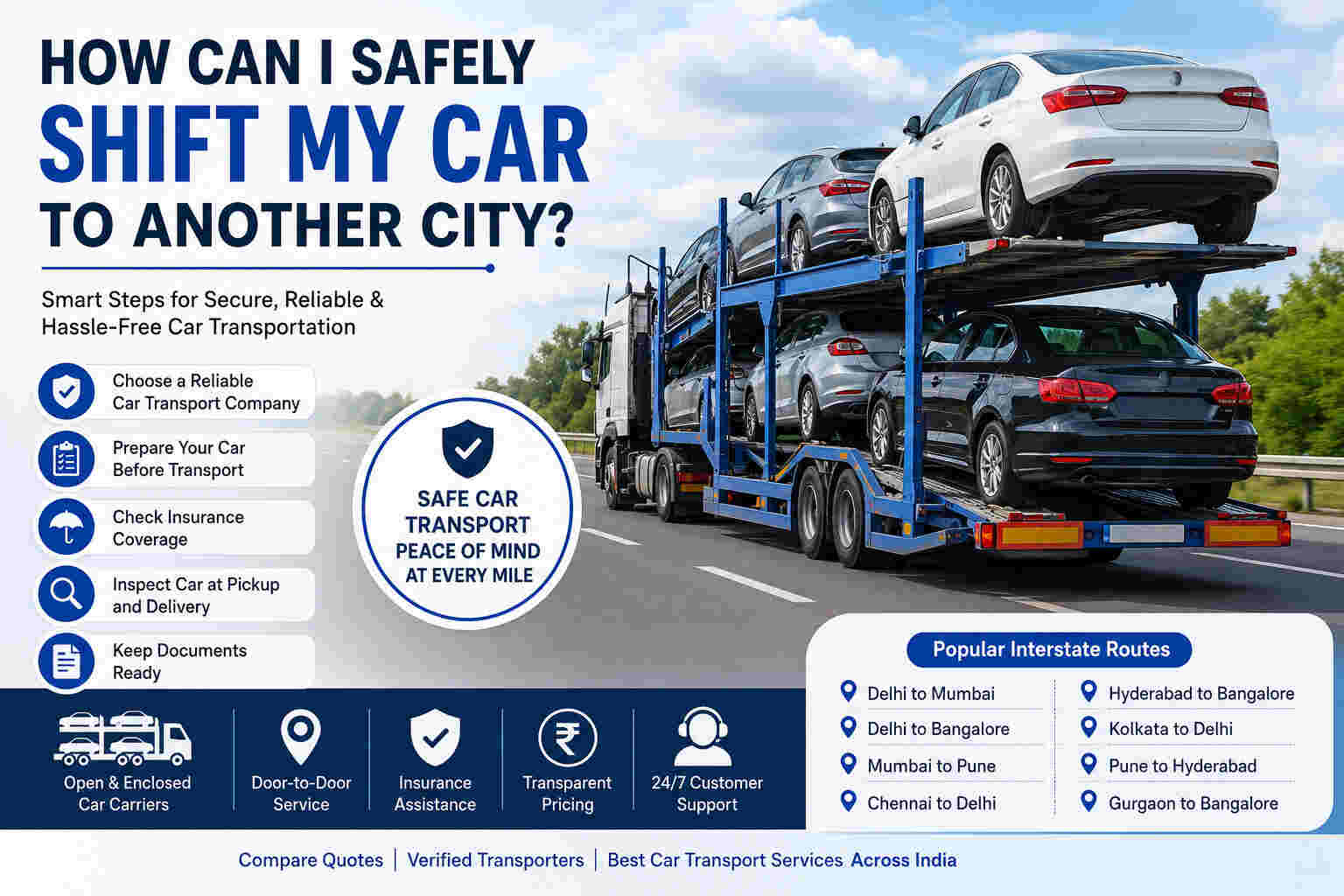
How Can I Safely Shift My Car to Another City?
Moving a car to another city can be challenging, especially when the destination is hundreds or thousands of kilometres away. Driving the vehicle yourself may take considerable time and can add unnecessary fatigue to an already busy relocation. Professional car transportation services offer a practical alternative, but choosing the right transporter and preparing the vehicle properly are important for a smooth experience.
So, how can I safely shift my car to another city? The safest approach is to choose a reliable car transporter, compare quotes, confirm insurance coverage, prepare and photograph the vehicle before pickup, select a suitable car carrier, and inspect the car carefully when it reaches the destination. Proper planning can reduce avoidable problems during car shifting.
How Can I Safely Shift My Car to Another City?
To safely shift your car to another city, start by researching reputable car transport companies and checking their experience, reviews, service terms, and insurance arrangements. Do not select a transporter only because it offers the lowest quotation. A very low price may not always include all transportation or handling charges.
Once you shortlist a transporter, ask for a detailed quotation that clearly explains the pickup location, delivery location, vehicle type, carrier type, estimated delivery timeline, insurance provisions, and any additional charges. Before handing over the vehicle, photograph its exterior and interior and record its condition.
The car should then be loaded and secured properly on an appropriate carrier. At delivery, inspect the vehicle carefully before completing the handover process. These simple precautions can make car shifting to another city more organized and secure.
Why Use Professional Car Transport Services?
For long-distance relocation, professional car transport services can be more convenient than driving the vehicle yourself. A long road journey requires planning for fuel, accommodation, tolls, traffic, weather, and vehicle maintenance. It can also add several hours or days to your relocation schedule.
A professional car carrier is designed to transport multiple vehicles using specialized loading and securing equipment. Depending on the transporter and route, customers may also have options such as door-to-door car transport.
For example, someone relocating from Delhi to Mumbai may prefer vehicle transportation rather than driving the entire distance. Similarly, routes such as Chennai to Delhi, Hyderabad to Bangalore, Kolkata to Delhi, or Pune to Hyderabad can involve substantial travel time. Professional transportation allows the customer to focus on the rest of the relocation while the vehicle is transported separately.
Steps to Safely Shift Your Car to Another City
The first step is to research and compare car transport companies. Look at their experience, customer feedback, communication, service coverage, and quotation details. Ask questions about how the vehicle will be loaded, transported, insured, and delivered.
Next, verify the transporter and understand exactly who will be responsible for moving your vehicle. Ask for relevant business and transportation details and make sure the name on your documentation matches the service provider you are dealing with.
The quotation should be transparent. Ask whether the quoted car transport cost includes loading, transportation, unloading, insurance-related charges, taxes, tolls, door-to-door delivery, or any other applicable fees. Getting these details in writing can help prevent misunderstandings later.
Insurance is another important consideration. Before booking, understand what coverage is available during transportation, what exclusions apply, and what procedure should be followed if the vehicle is damaged. Do not assume that every transporter offers identical coverage.
Selecting the right carrier is equally important. A standard open carrier may be suitable for many everyday vehicles, while an enclosed carrier can provide additional protection for certain high-value, luxury, vintage, or specialty vehicles. The choice should depend on the vehicle, route, budget, and protection requirements.
Before pickup, prepare your vehicle and document its condition. Take clear photographs from multiple angles and record existing scratches, dents, or other visible marks. Keep a copy of the relevant documents and the transporter's receipt or consignment information.
Finally, inspect the car carefully when it arrives. Compare its condition with the photographs taken before transportation and report any concern promptly according to the transporter's claims or complaint procedure.
How to Prepare Your Car Before Transportation
Proper preparation can make the car shifting process easier. Start by cleaning the vehicle so that existing scratches, dents, or paint marks are clearly visible. Take photographs of the exterior from different angles and capture important areas of the interior as well.
Remove personal belongings and valuables from the car. Items left inside the vehicle may move during transportation and can also create confusion about responsibility if something is lost or damaged.
Check the car's tyre pressure and ensure that the vehicle is in a suitable condition for loading and unloading. Record the odometer reading and note any existing mechanical problems. If the vehicle has an alarm, immobilizer, modified suspension, or another special feature, inform the transporter before pickup.
Keep important personal documents separately rather than leaving them inside the vehicle. Also, follow any preparation instructions provided by the selected transporter.
Open vs Enclosed Car Carrier: Which Is Safer?
The choice between an open and enclosed car carrier depends on the type of vehicle and the level of protection you require.
Open carriers are commonly used for standard vehicle transportation and can be a practical choice when affordability is an important factor. However, the vehicle remains exposed to normal outdoor conditions during the journey.
Enclosed carriers provide greater protection from weather and road debris because the vehicle is transported within a covered environment. They can be worth considering for luxury, vintage, classic, or high-value vehicles where additional protection is a priority.
There is no single carrier type that is best for every customer. Consider the vehicle's value, transportation distance, route, budget, availability, and desired level of protection before making your choice.
How Much Does It Cost to Shift a Car to Another City?
Car shifting charges vary from one route and vehicle to another. There is no single fixed car transport price that applies throughout India.
The main factors affecting car transportation charges include the distance between pickup and delivery locations, vehicle size and type, carrier type, pickup accessibility, delivery location, transportation method, seasonal demand, and additional services.
Door-to-door transportation may have different pricing from terminal-based arrangements. Similarly, an enclosed carrier may cost more than an open carrier because of the additional protection it provides.
When comparing quotes, look beyond the final price. Check exactly what services are included and whether there are additional charges. A transparent quotation makes it easier to compare different car transport services fairly.
How Long Does Car Transportation Take?
The time required to transport a car depends on the distance, route, traffic, weather conditions, pickup and delivery locations, transporter schedule, and accessibility of the destination.
Shorter routes may take less time, while interstate car transportation over long distances can require considerably more planning. Delays can also occur because of traffic, weather, road conditions, or operational issues.
When booking a vehicle transport service, ask for an estimated delivery timeline rather than assuming a guaranteed arrival date. If you need the car by a specific date, communicate your requirement before confirming the booking.
Documents Required for Car Transportation
The documents required for car transport can vary depending on the transporter, route, and transportation arrangement. Customers should ask the selected service provider for a current list of required documents before pickup.
Commonly requested information may include vehicle registration details, identification and contact information, insurance-related documents, and transport or consignment paperwork.
Keep copies of important documents for your records and carefully check the details mentioned on the transportation receipt or consignment documentation. If the vehicle is being transported on behalf of someone else, clarify any additional authorization requirements with the transporter.
Common Mistakes to Avoid When Shifting a Car
One of the biggest mistakes is choosing a transporter solely because of the lowest quote. Price matters, but reliability, service terms, insurance, vehicle handling, and communication are also important.
Another common mistake is failing to document the vehicle's condition before pickup. Clear photographs can provide a useful record of the car's condition before transportation.
Customers should also avoid leaving valuables inside the vehicle, ignoring insurance terms, or failing to read the quotation carefully. At delivery, inspect the vehicle before accepting it and raise any concerns promptly.
Taking a little extra time before pickup can help avoid unnecessary confusion later.
Car Transport by Road vs Car Transport by Train
Customers relocating between cities may come across both car transport by road and car transport by train. Each option can have different availability, processes, costs, and delivery arrangements.
Road transportation can provide greater flexibility for pickup and delivery locations, particularly when door-to-door service is available. Rail-based transportation may be suitable on routes where an appropriate vehicle transportation facility is available.
The best option depends on your route, preferred delivery arrangement, budget, schedule, and service availability. Compare the complete transportation process rather than choosing a method based only on its advertised price.
How CarBikeMovers.com Can Help You Find Car Transport Services
Finding a suitable transporter is an important part of safely shifting a car to another city. CarBikeMovers.com helps customers submit their vehicle transportation requirements and connect with car transport service providers.
Instead of selecting a provider based only on price, customers can compare relevant factors such as transportation requirements, quoted cost, transporter experience, service terms, carrier options, and available safety provisions.
Whether you are planning car shifting from Delhi to Mumbai, Gurgaon to Bangalore, Mumbai to Pune, or another route across India, providing accurate pickup and delivery information can help transporters offer more relevant quotations.
The final decision should always be based on your specific requirements and the terms provided by the selected transporter.
Conclusion
Knowing how can I safely shift my car to another city starts with choosing the right transportation partner and understanding the complete process. Compare car transport companies carefully, verify the available insurance coverage, request a transparent quotation, prepare your vehicle, photograph its condition, and ensure that it is properly secured for transportation.
The right car carrier also matters. Standard vehicles may be suitable for open transportation, while valuable or specialty cars may benefit from additional protection through an enclosed carrier. At delivery, inspect the vehicle carefully before completing the handover.
If you are planning car shifting to another city, you can use CarBikeMovers.com to submit your requirement and explore suitable car transportation options. Comparing providers before booking can help you make a more informed decision based on your route, vehicle, budget, and service expectations.
FAQs About Safely Shifting a Car to Another City
1. How can I safely shift my car to another city?
To safely shift your car to another city, choose a reliable transporter, compare detailed quotations, understand insurance coverage, prepare the vehicle properly, photograph its condition before pickup, and select an appropriate carrier. At delivery, inspect the car carefully and compare its condition with the photographs taken before transportation.
2. Is it safe to transport a car through a professional car carrier?
Yes, professional car carriers can be a practical option for long-distance vehicle transportation when the transporter follows appropriate loading and securing procedures. However, customers should still verify the transporter's credentials, understand the service terms and insurance coverage, document the vehicle's condition, and inspect it after delivery.
3. What should I do before handing my car to a transporter?
Before handing over your car, clean it, remove personal belongings, photograph the exterior and interior, record the odometer reading, check visible scratches or dents, and note any mechanical or alarm-related issues. Keep important documents separately and review the transporter's quotation and consignment details before the vehicle is collected.
4. Should I choose an open or enclosed car carrier?
The choice depends on your vehicle, route, budget, and protection requirements. Open carriers can be suitable for many standard cars and are often a practical transportation option. Enclosed carriers provide additional protection from outdoor conditions and may be more appropriate for luxury, vintage, classic, or high-value vehicles.
5. Is car insurance required during transportation?
Insurance arrangements can vary between transporters and services, so customers should confirm the available coverage before booking. Ask what is covered, what exclusions apply, and what procedure must be followed if damage occurs. Do not assume that every car transport company provides identical insurance terms.
6. How much does it cost to transport a car to another city?
The car transport cost depends on factors such as distance, vehicle type and size, pickup and delivery locations, carrier type, transportation method, seasonal demand, and additional services. Door-to-door delivery or enclosed transportation may affect the final quotation. It is best to compare detailed quotes for your specific route.
7. How long does it take to transport a car between cities?
Car transportation time varies depending on the distance, route, traffic, weather, pickup and delivery locations, transporter schedule, and road conditions. Long-distance interstate transportation generally requires more time than shorter routes. Ask the transporter for an estimated delivery timeline before booking and allow some flexibility for unexpected delays.