


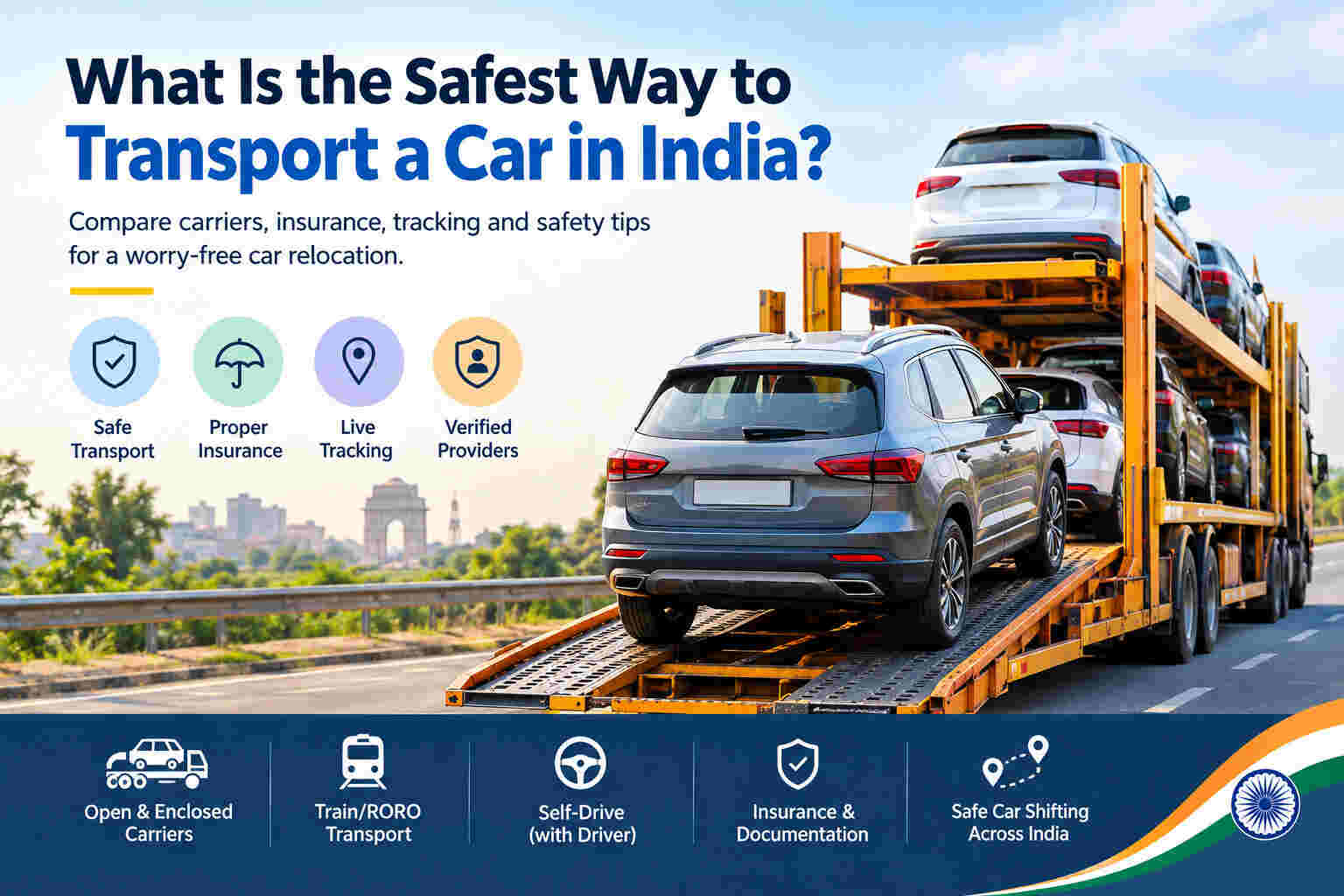
What Is the Safest Way to Transport a Car in India?
Relocating to a new city, buying a car from another state, or shipping your vehicle home after a work transfer — car transport in India comes with real risks: scratches, dents, delayed delivery, and even outright scams. If you've searched "what is the safest way to transport a car in India," here's the short answer before we go deeper.
Quick Answer: The safest way to transport a car in India is by using a licensed, insured enclosed car carrier service with GPS tracking, a signed condition report, and a written agreement — this minimizes damage, theft, and delivery-time risk compared to open trailers or self-drive options.
Understanding the Risks of Car Shifting in India
Before choosing a vehicle relocation service, it helps to know what can go wrong. Common issues in car shifting include stone chips and scratches from open transport, mechanical wear from long-distance self-driving, delayed delivery due to poor route planning, and fraudulent operators who vanish after taking advance payment. Understanding these risks is the first step toward safe car transport.
Modes of Car Transport in India
1. Enclosed (Covered) Car Carriers
Your vehicle is loaded into a closed container truck, fully shielded from dust, rain, and road debris. This is widely considered the safest and most premium option, ideal for luxury, vintage, or new cars.
2. Open Trailer Transport
The car sits exposed on a multi-level open trailer alongside other vehicles. It's the most common and budget-friendly method but carries a higher risk of scratches, dust accumulation, and weather damage.
3. RORO (Roll-on/Roll-off) via Train
Available on select routes (like Delhi–Bengaluru or Delhi–Chennai), cars are driven onto specialized train wagons. This is fast, fuel-efficient, and reduces road-related wear, though route availability is limited.
4. Self-Drive with a Hired Driver
Some people hire a driver to drive the car to the destination. While flexible, this exposes the vehicle to accidents, high mileage, and reduced resale value, making it the least safe option overall.
Key Factors That Determine Safety
- Insurance coverage: Ensure the transport company provides transit insurance covering damage, theft, and total loss — not just their own liability disclaimer.
- GPS tracking: A carrier offering real-time tracking lets you monitor your car's location throughout transit.
- Loading and packing method: Hydraulic loading (rather than driving the car up ramps) reduces undercarriage damage.
- Carrier reputation: Check verified reviews, years in operation, and whether the company is registered with proper transport licenses.
- Driver verification: Background-checked, experienced drivers reduce accident risk significantly.
Step-by-Step Checklist for Choosing a Safe Car Transport Company
- Verify the company's registration and GST details.
- Ask for proof of transit insurance in writing.
- Request a pre-transport vehicle condition report with photos.
- Confirm GPS tracking access before payment.
- Read the written agreement carefully — no verbal-only deals.
- Compare quotes from at least 3 vendors [link to "car transport cost calculator"].
- Check for a documented delivery timeline and penalty clause for delays.
Red Flags to Avoid
Be cautious of vendors demanding full cash payment upfront, those with no physical office or verifiable address, missing insurance documentation, and companies unwilling to provide a written contract. These are classic signs of unreliable car carrier services and should be treated as immediate deal-breakers.
Cost vs. Safety Trade-Offs
Enclosed car carriers typically cost 20–40% more than open trailers, but the added expense covers superior protection, insurance, and peace of mind. RORO train transport often falls in between, offering a good safety-to-cost ratio on supported routes. For older or lower-value vehicles, open trailer transport with solid insurance may be a reasonable, cost-effective choice.
Conclusion
The safest way for car transport a in India combines the right mode of transport — ideally an enclosed carrier or RORO train — with a verified, insured vendor, GPS tracking, and a documented agreement. Before booking, always compare verified car transport companies, check reviews, and confirm insurance in writing to protect your vehicle from damage, delay, or fraud.
Frequently Asked Questions
1. How much does it cost to transport a car in India?
Car transport costs in India typically range from ₹8,000–₹15,000 for short distances (under 500 km) and ₹15,000–₹40,000+ for long-distance moves, depending on the mode (open vs. enclosed), vehicle size, and route.
2. How long does car transport take in India?
Most road-based car carrier services take 3–7 days depending on distance and route conditions. RORO train transport is often faster, sometimes completing in 24–48 hours on supported city pairs.
3. Is insurance mandatory when transporting a car in India?
While not legally mandatory, transit insurance is strongly recommended. Reputable car transport companies offer insurance covering damage, theft, or total loss during transit — always confirm this in writing before booking. [link to IRDAI/insurance guideline]
4. Is train transport safer than trailer transport for cars?
RORO train transport is generally safer than open trailers since the car avoids prolonged road exposure, reducing scratch, dust, and accident risk. However, it's only available on specific routes, unlike trailer services which operate pan-India.
5. How can I track my car during transit?
Most reliable vehicle relocation services provide GPS tracking links or app access, letting you monitor your car's real-time location and estimated delivery time throughout the journey.
6. What documents are needed to transport a car in India?
You'll typically need the car's RC (Registration Certificate), valid insurance papers, a copy of your ID proof, and a signed transport agreement with the vendor. Some companies also require a PUC certificate.
7. What should I do if my car is damaged during transport?
Immediately document the damage with photos, compare it against the pre-transport condition report, and file a claim with the transport company and their insurer within the timeframe specified in your agreement — usually 24–48 hours of delivery.